
Best Garage Heaters 2026: Electric vs. Mini-Split (The Thermodynamics Guide)
By Pro Garage Gear Team | Estimated Read Time: 10 Minutes
This post contains affiliate links. We may earn a commission if you purchase through these links
If you are looking for the Best Garage Heater, you have three choices: Portable Propane (Fast but Wet), 240V Electric (Clean but Weak), or a Mini-Split (The Holy Grail).
The “Frozen Wrench” Reality: There is nothing worse than picking up a steel wrench in January when it’s 20°F. It sucks the heat right out of your hand.
The Hidden Danger: It’s not just about comfort. Using the wrong type of heat (Propane) pumps gallons of water into the air, rusting your Table Saw and ruining your car’s clear coat.
Most reviews just tell you which one gets hot. We are going to tell you which one protects your tools from rust and your lungs from Carbon Monoxide.
When heating an attached garage, it’s important to understand the health risks of attached garages, including carbon monoxide buildup and poor ventilation, before choosing a heating solution.🧪 The Science of Heat (Read Before Buying)
Before you buy, you must understand the difference between Combustion and Electric heat.
| Heating Type | Propane (Tank Top) | Electric Coil (Dr. Heater) | Mini-Split (MrCool) |
| Fuel Cost | High ($4.00/gallon) | Medium ($0.15/kWh) | Low ($0.15/kWh) |
| Efficiency | 80% (Heat Loss) | 100% (Resistive) | 300% (Heat Pump) |
| Cost Per Hour | ~$2.50 / hour | ~$0.75 / hour | **~$0.25 / hour** |
| Rust Risk | ❌ High (Wet Heat) | ✅ Zero (Dry) | ✅ Zero (Dehumidifies) |
| Analyst Verdict | Emergency Only | Weekend Warrior | Daily User |
*Assuming $0.15/kWh and $3.50/gal Propane. Mini-Split assumes DIY install.
The Math:
- A Mini-Split (Heat Pump) moves heat rather than creating it. For every $1 of electricity you put in, you get $3 of heat out.
- Verdict: If you work in the garage more than 5 hours a week, the MrCool pays for itself in electricity savings in 2 years.
1. The “Rust” Factory: Propane & Kerosene
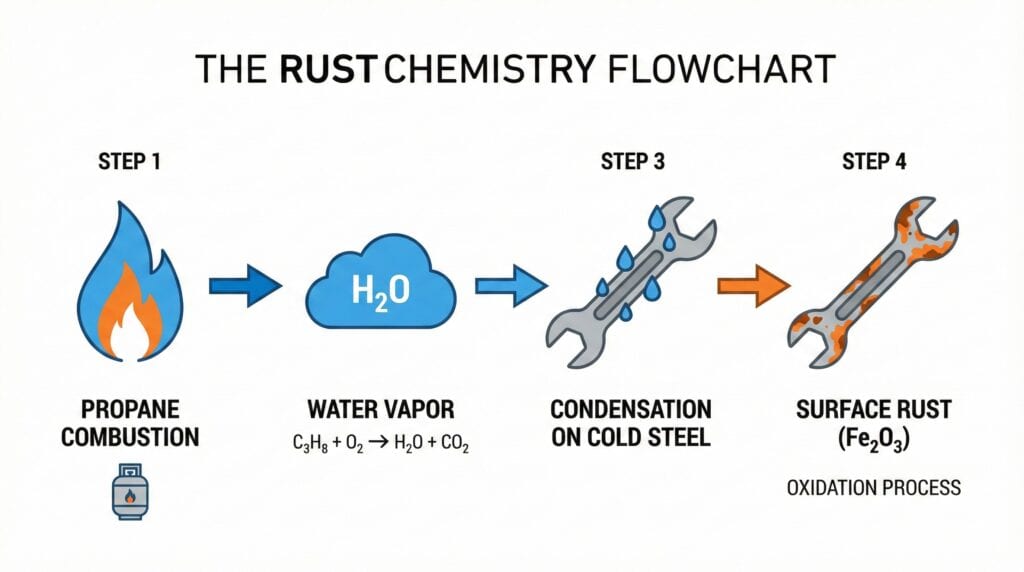
Burning fuel creates two things: Heat and Water Vapor.
- The Math: For every gallon of propane you burn, you release roughly 0.8 gallons of water into the air.
- The Result: If you run a “Torpedo Heater” for 4 hours, your windows will drip with condensation. Your cast-iron tools (table saws, lathes) will flash-rust overnight.
- Verdict: Only use propane for “Emergency Heat” with the garage door cracked open. Never use it for a permanent shop.
2. The “Dry” Heat: Electric & Mini-Splits
Electric heaters heat a coil. There is no fire, so there is no water.
- The Benefit: It lowers relative humidity. This dries out your car after a snowy drive and protects your tools from rust.
- Verdict: If you store expensive cars or tools, electric is the only safe option.
🏆 The Comparison: Fast vs. Clean vs. Perfect
| Feature | Dr. Heater DR966 (The “Workhorse”) | MrCool DIY Mini-Split (The “Dream”) | Propane Tank Top (The “Emergency”) |
| Fuel Source | 240V Electricity | 240V Electricity | Propane / Gas |
| Moisture | Zero (Dry Heat) | Dehumidifies | High (Wet Heat) |
| Install | Medium (Hardwire) | High (Drill through wall) | Instant |
| Noise | Fan Hum | Whisper Quiet | Jet Engine |
| Cost to Run | High | Very Low (Heat Pump) | High |
| Best For | Woodworking / Mechanics | Full “Man Cave” Build | Quick Repair Jobs |
| Price | Check Price on Amazon | Check Price on Amazon | Check Price on Amazon |
MrCool DIY Mini-Split (12k BTU)
- Why We Picked It: It’s the only true “DIY” mini-split (Pre-charged lines).
- Best Feature: “Dry Mode” removes humidity to stop tools from rusting.
- Efficiency: Cuts heating bills by 60% vs. space heaters.
- Bonus: Provides Air Conditioning in the summer.
Safe Transaction via Amazon.com
1. The “Dream”: MrCool DIY Mini-Split
If you are building a serious shop, this is the endgame. It provides Heat and Air Conditioning.
- The “DIY” Part: Standard Mini-Splits require a licensed HVAC tech to vacuum the lines (costing $1,000+). The MrCool DIY comes with pre-charged lines. You can install it yourself in 4 hours with a wrench.
- Efficiency: It uses a “Heat Pump.” It is 300% more efficient than a standard electric heater.
- The Bonus: It has a “Dry Mode” that acts as a powerful dehumidifier, keeping your tools pristine.

2. The “Workhorse”: Dr. Heater DR966 (240V)
If you just want warm air and don’t care about AC, this is the standard. It hangs from the ceiling and blasts heat.
- The Power: It’s 6,000 Watts. It will raise a 2-car garage from 30°F to 60°F in about 45 minutes.
- The Reliability: It’s a simple resistive coil and a big fan. There is almost nothing to break.
- The “Dust” Warning: Because it moves a lot of air, it will blow sawdust around. Turn it off before you varnish or paint.

3. The “Renter” Option: Infrared / Oil-Filled
If you rent and can’t wire 240V, do not buy a fan heater (they are too weak on 120V). Buy an Infrared Heater.
- The Physics: It shoots invisible rays that heat objects (you), not the air.
- The Win: You feel warm instantly, even if the air is cold. It’s silent and dust-free.

⚠️ Installation Audit: The Hidden Costs
Cheap heaters are expensive to install. Here is the math nobody tells you.
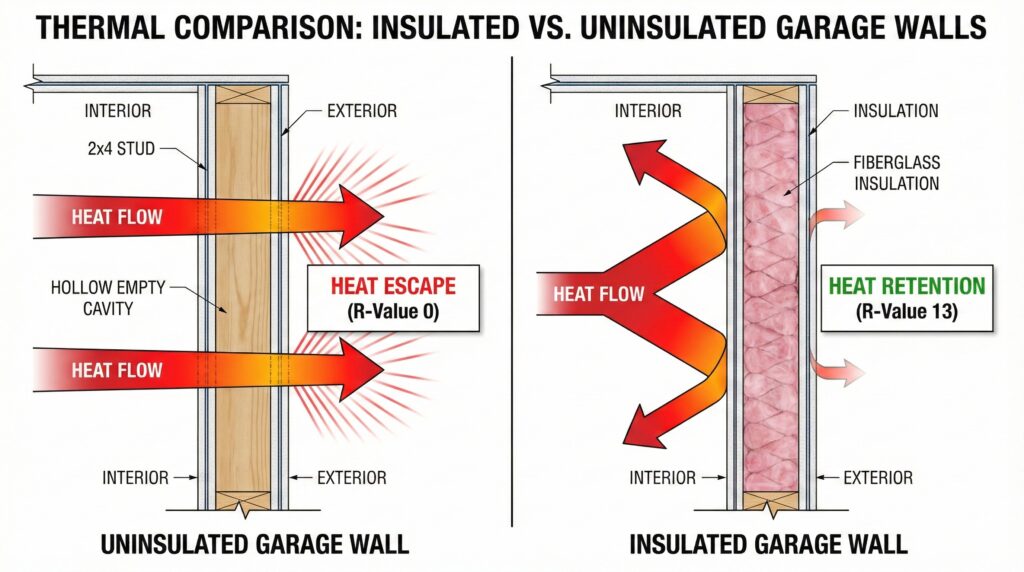
1. The “Insulation Delta”
A heater is useless if your walls are bare studs.
You also need to understand what is hardwired installation“ or “240V wiring
- The Reality: Without insulation, you are heating the neighborhood.
- The Rule: If your garage is uninsulated, don’t buy a Mini-Split (it will run 24/7 and die). Buy a Radiant Infrared Heater and aim it at your workbench. Heat yourself, not the room.
2. The Electrical Bill (The $400 Surprise)
You cannot plug a Dr. Heater or MrCool into a standard wall outlet.
- The Requirement: You need a Double-Pole 30-Amp Breaker and 10-Gauge wire (10/2 Romex).
- The Cost: If you hire an electrician, this “outlet” will cost $300–$600 to install. Factor this into your budget.
3. The “Silent Killer”: Carbon Monoxide
If you ignore our advice and use a Propane or Kerosene heater:
- The Risk: In a sealed modern garage, these heaters consume all the oxygen and release Carbon Monoxide (CO).
- The Requirement: You MUST install a CO Detector plug-in.
- The Lie: Do not trust “Vent Free” propane heaters. They still produce CO. Crack a window or door 2 inches at all times.
Frequently Asked Questions
Q: Why do propane heaters rust tools?
Combustion chemistry. When you burn Propane (C3H8), the chemical reaction creates Carbon Dioxide and Water Vapor (H2O). For every gallon of propane burned, roughly 0.8 gallons of water is released into the air. This humidity settles on cold steel tools (table saws, wrenches), causing flash rust overnight.
Q: Is a Mini-Split cheaper to run than a space heater?
Yes, significantly. A standard electric space heater is 100% efficient (1 watt in = 1 watt of heat). A Mini-Split uses “Heat Pump” technology, which is often 300% efficient (1 watt in = 3 watts of heat). This means it costs roughly 1/3rd the price to operate compared to a standard Dr. Heater.
Q: Can I install a Mini-Split myself?
Traditionally, no. You needed an HVAC license to handle refrigerant. However, the MrCool DIY series comes with pre-charged “Quick Connect” lines that are sealed at the factory. This allows a handy homeowner to install it in about 4 hours without specialized vacuum pumps or gauges.
Final Verdict: Which One?
- For the “Pro” Shop: Buy the MrCool DIY Mini-Split. It is an investment ($1,500+), but having AC in the summer and dry heat in the winter makes the garage usable 365 days a year.
- For the Woodworker: Buy the Dr. Heater DR966. Hardwire it to the ceiling. It’s robust, cheap, and creates the dry heat your tools need.
- For the “Emergency” Fix: Keep a Propane Tank Top heater for emergencies, but never use it for long projects, or your tools will rust.
Once your garage is warm, make sure it’s bright enough to work with High-CRI lights.
Aim your infrared heater directly at your workbench so your hands stay warm while wrenching.