
Attached Garage Health Risks: Benzene Exposure, Carbon Monoxide, and Hidden Home Dangers
This post contains affiliate links. We may earn a commission if you purchase through these links
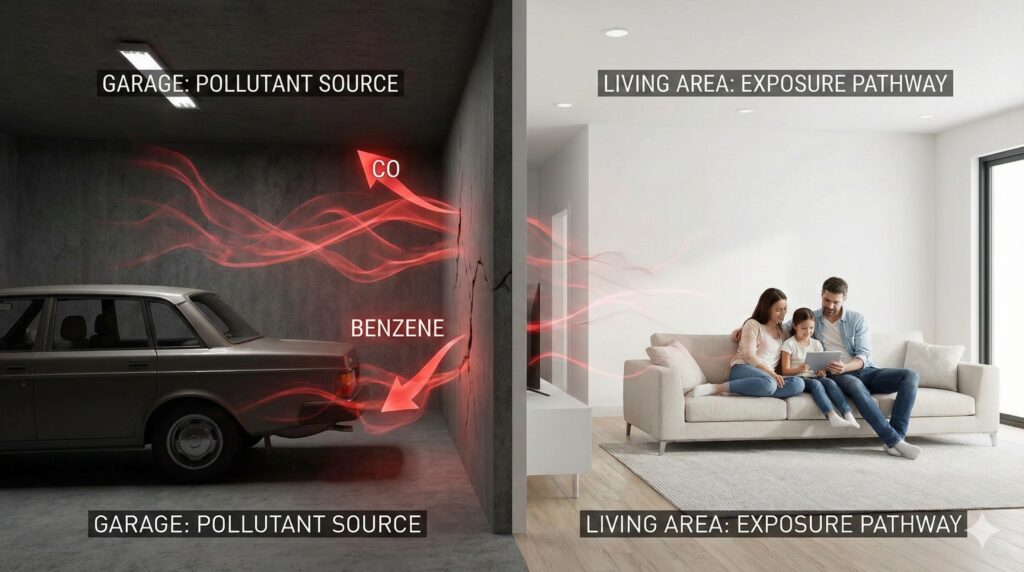
You spent $500 on a 4K security camera to watch your front door, but one of the most serious threats to your family may already be inside your home—invisible, odorless, and seeping through the wall from your garage.
These attached garage health risks—especially benzene exposure, carbon monoxide (CO) infiltration, and poor ventilation—are among the most overlooked dangers in modern homes.
As a data-driven analyst, I don’t rely on “common sense” or assumptions. I rely on verified research. And the data on attached garages is clear: homes with attached garages consistently show higher levels of toxic pollutants inside living spaces compared to homes with detached garages.
This isn’t just about organization or convenience. It’s about creating a Garage Firewall—a system that protects your home from toxins, fire hazards, and forced entry.
Below is a data-backed guide to understanding and fixing the most critical attached garage health risks.
Attached Garage Health Risks: Benzene, Carbon Monoxide & Cold Starts
Most homeowners assume the door between the garage and the house forms an airtight seal. Research shows that assumption is dangerously wrong.
Studies from Health Canada and the U.S. Environmental Protection Agency (EPA) confirm that walls and ceilings separating garages from living spaces are rarely airtight. Pollutants migrate indoors through tiny gaps around electrical outlets, framing joints, drywall seams, and duct penetrations.
This process is often driven by negative pressure—your HVAC system literally pulls contaminated air from the garage into your home.
The “Cold Start” Carbon Monoxide Spike
When a car engine is started cold, the catalytic converter has not yet reached operating temperature.
The Data: A cold engine can emit over 80,000 ppm of carbon monoxide during the first minute of operation.
The Risk: Even with the garage door open, this dense cloud of CO and unburned fuel vapors becomes trapped and slowly leaks into the home over the next several hours.
The Benzene Factor
Benzene exposure does not only come from running vehicles.
It also evaporates from:
- Stored gasoline cans
- Lawn equipment
- Motorcycles and generators
- Hot engines parked after driving
Multiple studies show that families living in homes with attached garages have higher blood-benzene markers than those with detached garages—benzene being a known human carcinogen.
The Fix: Seal the Garage-to-House Firewall
Treat the shared wall like a pressure barrier:
- Weatherstrip the access door: If light is visible around the frame, garage air is entering your home.
- Seal all penetrations: Use fireblock expanding foam to seal gaps around wires, pipes, and ducts.
This step alone can significantly reduce attached garage health risks.
How Poor Garage Ventilation Increases Health Risks (ASHRAE 62.2)
Sealing slows pollution transfer—but it doesn’t remove contaminated air.
According to ASHRAE Standard 62.2, passive airflow is insufficient for garages attached to modern airtight homes.
The 100 CFM Rule
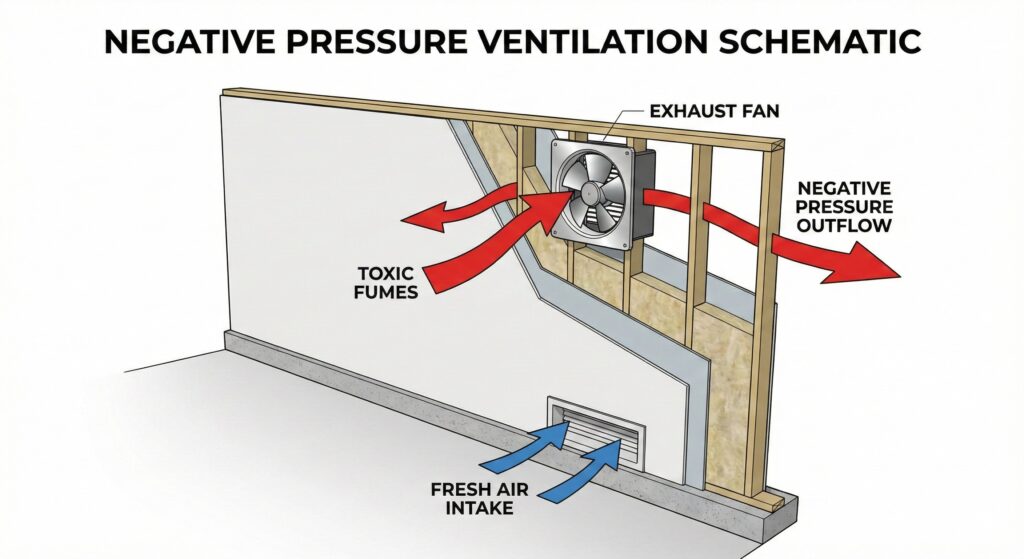
To prevent fumes from back-drafting into living areas, the garage must remain at negative pressure relative to the house.
ASHRAE Guidance: Most standard residential garages require a mechanical exhaust fan rated at approximately 100 CFM (cubic feet per minute).
Best-Practice Solution
A through-wall garage exhaust fan paired with a smart sensor is the most effective setup. In colder climates, pairing proper ventilation with a safe heating solution—such as one of the best garage heaters—helps maintain comfort without increasing air quality risks
- Temperature spikes indicate a recently parked engine
- Humidity spikes indicate trapped exhaust gases
- The fan activates automatically and vents toxins outdoors
This approach dramatically reduces carbon monoxide and benzene accumulation.

Garage Security Risks That Put Your Home at Risk in Seconds
Health risks aren’t the only danger associated with attached garages.
Law enforcement data shows that nearly 9% of residential break-ins occur through garages, often because they provide concealed access to the home.
The “Fishing” Attack (6 Seconds)
This is one of the most common garage break-in methods:
- The top of the garage door is flexed inward
- A wire hook is inserted
- The emergency release cord is pulled
- The door is lifted manually
The Fix: The Zip-Tie Method
A simple solution costs pennies:
- Loop a small zip tie through the emergency release latch and opener rail
- The tie blocks coat-hanger access
- In a real emergency, the tie snaps with force
For additional protection, modern smart garage openers can send instant alerts and include physical rail-locking features. Many homeowners now rely on best smart garage door openers or dedicated best smart garage door controllers to monitor unauthorized access in real time.
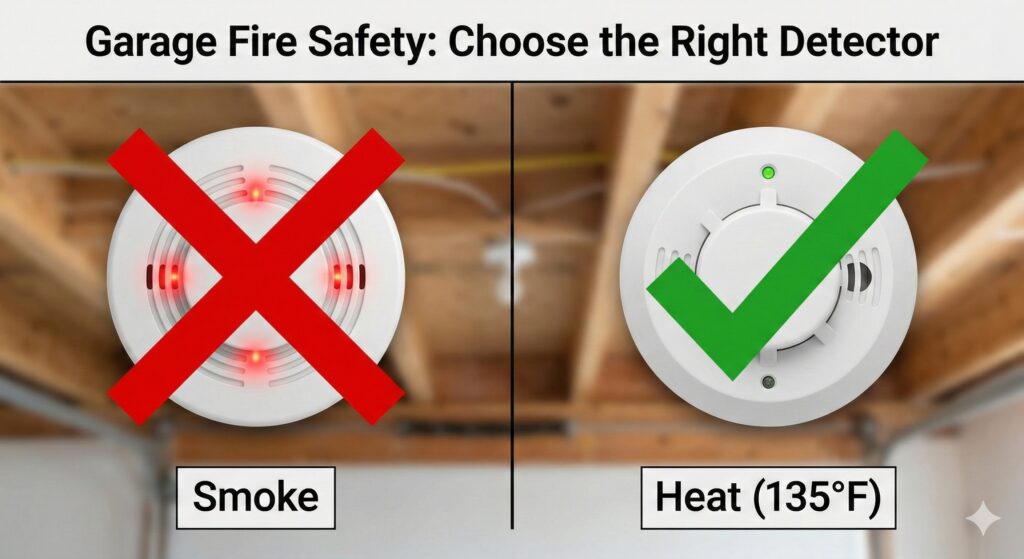
Fire Safety Risks in Attached Garages: Smoke Alarms vs Heat Alarms
Standard smoke detectors do not belong in garages.
Why Smoke Alarms Fail in Garages
Garages contain:
- Exhaust particles
- Dust
- Rapid temperature changes
These conditions cause frequent false alarms, leading many homeowners to disable the device entirely.
Why Heat Alarms Are Code-Recommended
Fire safety standards specify heat detectors, not smoke alarms, for garages.
Rate-of-Rise Heat Alarms:
- Ignore smoke and fumes
- Trigger only on rapid temperature increases
- Activate if ambient heat exceeds ~135°F
A ceiling-mounted heat alarm provides reliable protection without nuisance alerts. If your garage also functions as a workshop, placing equipment thoughtfully around a sturdy surface like one of the best garage adjustable workbenches helps keep heat sources, tools, and ignition risks properly managed.
The Garage Firewall Checklist
Use this checklist to reduce attached garage health risks:
- Seal It: Weatherstrip doors and fireblock all wall penetrations
- Vent It: Install a 100 CFM mechanical exhaust fan
- Secure It: Block emergency release fishing attacks
- Monitor It: Replace smoke detectors with heat alarms
Recommended Garage Safety Upgrades (Expert Picks)
If you’re addressing attached garage health risks, these upgrades offer the highest safety return for the least effort:
1. Garage Heating (Safe, Controlled Use)
For cold climates, choose sealed or electric heating solutions designed for garages. See our in-depth guide to the best garage heaters for safe operation without worsening carbon monoxide risks.
2. Smart Garage Door Security
Garages are a common entry point for break-ins and air leakage. Modern monitoring solutions like the best smart garage door openers and best smart garage door controllers alert you instantly if the door opens unexpectedly.
3. Fire-Safe Garage Monitoring
Replace nuisance-prone smoke alarms with code-appropriate heat detectors to protect against real fire threats without false alarms.
4. Organized, Low-Risk Workspaces
Reducing clutter and chemical storage lowers exposure risks. Adjustable work surfaces such as the best garage adjustable workbenches help keep heat sources, tools, and fuels safely separated.
5. Cleaner Garage Setups
Wall-mounted cleaning systems minimize stored chemicals and spills. A wall mounted pressure washer keeps cleaning equipment contained and off the floor.
Comparison Tables: Quick Safety & Upgrade Reference
| Risk / Feature | Recommended Upgrade | Key Benefit | Link |
|---|---|---|---|
| Carbon Monoxide / Air Quality | Mechanical exhaust fan (100 CFM) | Reduces CO & benzene exposure | See Installation Guide |
| Security / Break-ins | Smart Garage Door Opener | Alerts on unauthorized access | Best Openers |
| Security / Break-ins | Smart Garage Door Controller | Locks & remote monitoring | Best Controllers |
| Fire Safety | Heat Alarm / Rate-of-Rise Sensor | Reliable fire detection | See Recommendations |
| Workspace Organization | Adjustable Garage Workbench | Keeps tools & fuels safely organized | Best Workbenches |
| Cleaning / Chemical Storage | Wall Mounted Pressure Washer | Reduces clutter and chemical spills | See Options |
Data & Standards Referenced
- U.S. Environmental Protection Agency (EPA) – Indoor Air Quality Research
- Health Canada – Benzene Exposure Studies
- ASHRAE Standard 62.2 – Residential Ventilation
- Residential Fire Safety Code Guidelines
Your garage should be a functional workspace—not a health hazard. A few targeted upgrades can protect your home’s air quality, improve fire safety, and eliminate one of the most overlooked security weaknesses in residential construction.
Your garage should be a functional workspace—not a health hazard. Simple upgrades such as ventilation, monitoring, and organized cleaning setups like a wall mounted pressure washer reduce clutter, chemical storage risks, and long-term exposure concerns while improving overall safety. A few targeted upgrades can protect your home’s air quality, improve fire safety, and eliminate one of the most overlooked security weaknesses in residential construction.